



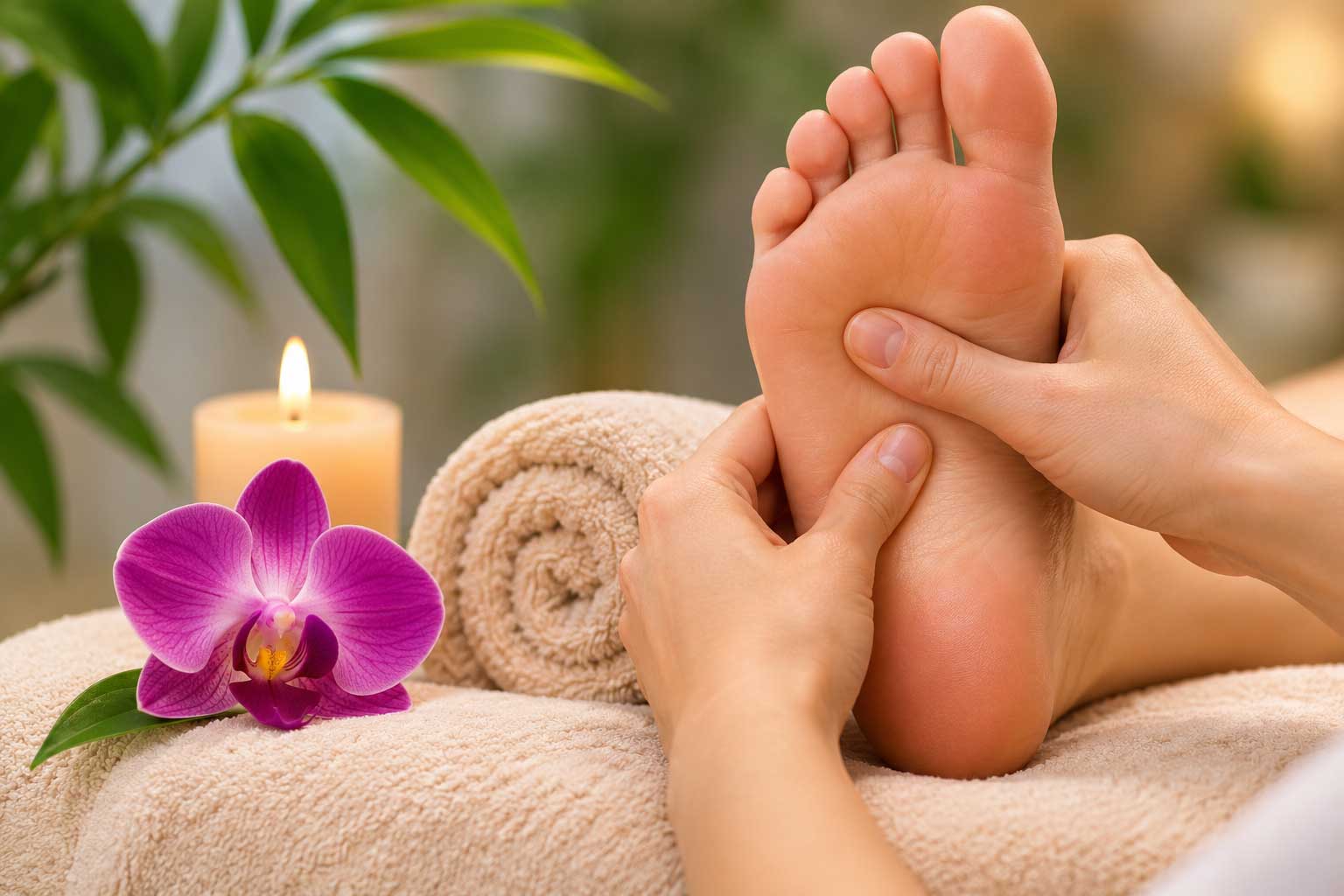
Learning how to do a foot massage is one of the simplest ways to care for someone you love, or for yourself. Your feet carry you thousands of steps a day, yet they’re usually the last part of your body to get any care. A good foot massage takes about 10 to 15 minutes and needs no special training. It can ease soreness, help you unwind before bed, and make a thoughtful gift for a partner, friend or parent.
This guide shows you how to do a foot massage step by step: how to set up, which strokes to use, how much pressure to apply, and what to avoid.
Table of Contents
Benefits of a Foot Massage
- Relieves tired, achy feet after long days of standing or walking
- Encourages relaxation and can help you wind down before sleep
- Loosens tight muscles and tendons, including the arch and heel
- Improves comfort and flexibility in the ankles and toes
- Creates a moment of connection when shared with someone else
What You’ll Need for a Foot Massage at Home
You don’t need much, and you probably already have all of it:
- Massage oil or lotion: coconut, almond or jojoba oil, or any unscented lotion
- A towel to protect furniture and wrap the feet
- A comfortable seat: the person receiving should recline with their foot raised to your lap or on a pillow
- Optional: a basin of warm water with Epsom salt for a 5–10 minute soak beforehand
How to Prepare
- Wash and dry the feet, or soak them in warm water for a few minutes to soften the skin and relax the muscles.
- Warm the oil by rubbing a teaspoon between your palms. Cold oil is a shock to the skin.
- Get comfortable. Sit facing the person’s feet with a towel across your lap. Keep your shoulders loose. If you tense up, so will your hands.
- Check in about pressure. Ask them to tell you whether they want lighter or firmer pressure at any point.
How to Do a Foot Massage: 7 Steps
Step 1: Warm-up strokes (effleurage)
Hold the foot between both palms, one on top and one on the sole. Glide your hands slowly from the toes up to the ankle and back. Repeat 5–6 times to spread the oil and warm the tissue.
Step 2: Wring the foot
Wrap both hands around the middle of the foot and gently twist them in opposite directions, like wringing a towel. Move from the heel toward the toes. This loosens the whole foot quickly.
Step 3: Thumb-walk the sole
Support the top of the foot with your fingers. Press your thumbs into the sole and “walk” them in small steps from the heel to the ball of the foot. Use small circular motions on any tight spots. This is where most tension sits, so take your time here.
Step 4: Knead the arch
Make a loose fist and gently roll your knuckles along the arch, from the heel to the ball. This works well for people who stand all day or wear unsupportive shoes.
Step 5: Massage each toe
Hold each toe between your thumb and index finger. Roll it gently, then give a slow, light pull to stretch it. Slide your fingers between the toes to finish. It sounds small, but people usually find it the most relaxing part.
Step 6: Work the heel and ankle
Squeeze and knead the heel with your fingertips. Then trace slow circles around the ankle bones with your thumbs, and gently rotate the ankle in both directions a few times.
Step 7: Finish with calming strokes
Repeat the long gliding strokes from Step 1, slowing down each time. End by holding the foot still between your palms for a few seconds, then wrap it in the towel to keep it warm. Repeat everything on the other foot.
Foot Pressure Points to Know
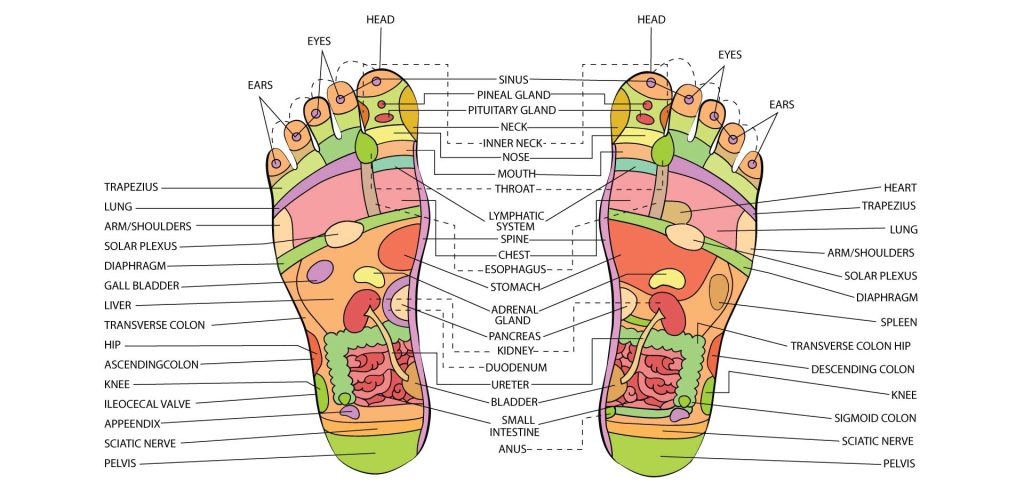
In reflexology, different areas of the foot are associated with other parts of the body. According to the National Center for Complementary and Integrative Health, massage may help with stress and some types of pain, but evidence for reflexology’s body-mapping claims is limited. Even so, steady pressure on a few spots feels good to most people:
- Center of the arch: a tender spot that often holds tension
- Below the ball of the foot: press here to help with general relaxation
- Base of the big toe: gentle circles here are especially calming
- Inner heel: good for people who walk or run a lot
Press each spot with your thumb for 5–10 seconds, release, and repeat 2–3 times.
How Much Pressure Should You Use?
Start light and build up gradually. A good massage should feel firm but comfortable. A “good hurt” is fine, but sharp pain is not. Use lighter pressure on the top of the foot, where the bones sit close to the skin. You can use firmer pressure on the sole and heel, which have more padding. Getting the pressure right is the biggest difference between knowing how to do a foot massage and doing it well.
Foot Massage Techniques for Different Needs
Once you know the basic routine, you can adapt it. Here’s how to do a foot massage that fits the moment.
For tired feet after a long day
Spend extra time on thumb-walking the sole and kneading the arch. Finish with a short warm soak so the muscles stay relaxed.
For better sleep
Use slow, long strokes and lighter pressure. Dim the lights, skip strong scents, and end by holding each foot still for 20–30 seconds.
For runners and active people
Focus on the heel, the arch and the Achilles area above the heel. Rolling the foot over a firm ball for a few minutes before massaging helps loosen the plantar fascia.
For older adults
Keep pressure gentle, support the ankle well, and check the skin for cuts or swelling first. Short, regular sessions work better than one long, deep one.
Common Foot Massage Mistakes to Avoid
- Rushing. Slow, steady strokes relax people more than fast ones.
- Using too much oil. Your hands will slip and lose grip. A teaspoon per foot is plenty.
- Tickling. Light, feathery touches tickle, while firm, confident contact relaxes.
- Ignoring feedback. Keep checking in, especially the first time.
- Forgetting the ankles and toes. These small areas make a big difference.
Safety Tips: When to Skip a Foot Massage
Avoid massaging the feet, or check with a doctor first, if the person has:
- Open wounds, infections, blisters or fungal infections
- Recent fractures, sprains or injuries
- Blood clots or deep vein thrombosis (DVT)
- Severe varicose veins
- Diabetes with nerve damage (neuropathy) or poor circulation
- Pregnancy (some practitioners recommend avoiding deep pressure around the ankles; ask a healthcare provider)
How to Do a Foot Massage on Yourself
No partner? Sit in a chair and cross one ankle over the opposite knee. Follow the same steps using your thumbs and knuckles. You can also roll each foot over a tennis ball, golf ball or frozen water bottle for 2–3 minutes. This is a quick way to work the arch, especially after exercise.
Frequently Asked Questions
Is it hard to learn how to do a foot massage?
No. Most people can learn how to do a foot massage in a single session by following the seven steps above. Start slowly, ask for feedback, and you’ll improve every time.
How long should a foot massage last?
About 5–10 minutes per foot is ideal for relaxation.
How often can you get a foot massage?
Daily is fine for most healthy people, as long as it doesn’t cause pain.
Is a foot massage good before bed?
Yes. Slow, gentle strokes can help the body relax and prepare for sleep. you can view the full article about having a foot massage before bed here.
What oil is best for a foot massage?
Coconut, sweet almond and jojoba oils are popular. Add a drop of lavender or peppermint essential oil for scent, but always dilute it.
Can a foot massage help with plantar fasciitis?
Gentle arch massage and ball-rolling may relieve some discomfort, but see a doctor or physiotherapist for ongoing heel pain.
When to Book a Professional Foot Massage
A home foot massage is great for everyday relaxation, but a trained therapist can go further: deeper techniques, better knowledge of pressure points, and a full hour dedicated to you. If you’re in Istanbul, try a professional foot massage or a reflexology session at Royal Foot Massage. You can also pair it with a professional pedicure for complete foot care.
Ready to relax? Book your massage in Istanbul today.
Final Thoughts
Now you know how to do a foot massage that actually feels good. You don’t need to be a professional: all it takes is warm hands, a little oil, slow movements and attention to how the person responds. Try these seven steps tonight. Your feet, or someone else’s, will thank you.