

Foot Reflexology Map: Which Part of Your Foot Connects to Which Organ?
Have you ever pressed a sore spot on your foot and wondered why it felt tender? Reflexologists say your feet are a small map of your whole body. Each toe, curve and pad is linked to a different organ or body part. This guide explains the foot reflexology map zone by zone, from the tips of your toes to your heel. It also shows how to work each area safely at home and what science says about it.
What Is a Foot Reflexology Map?
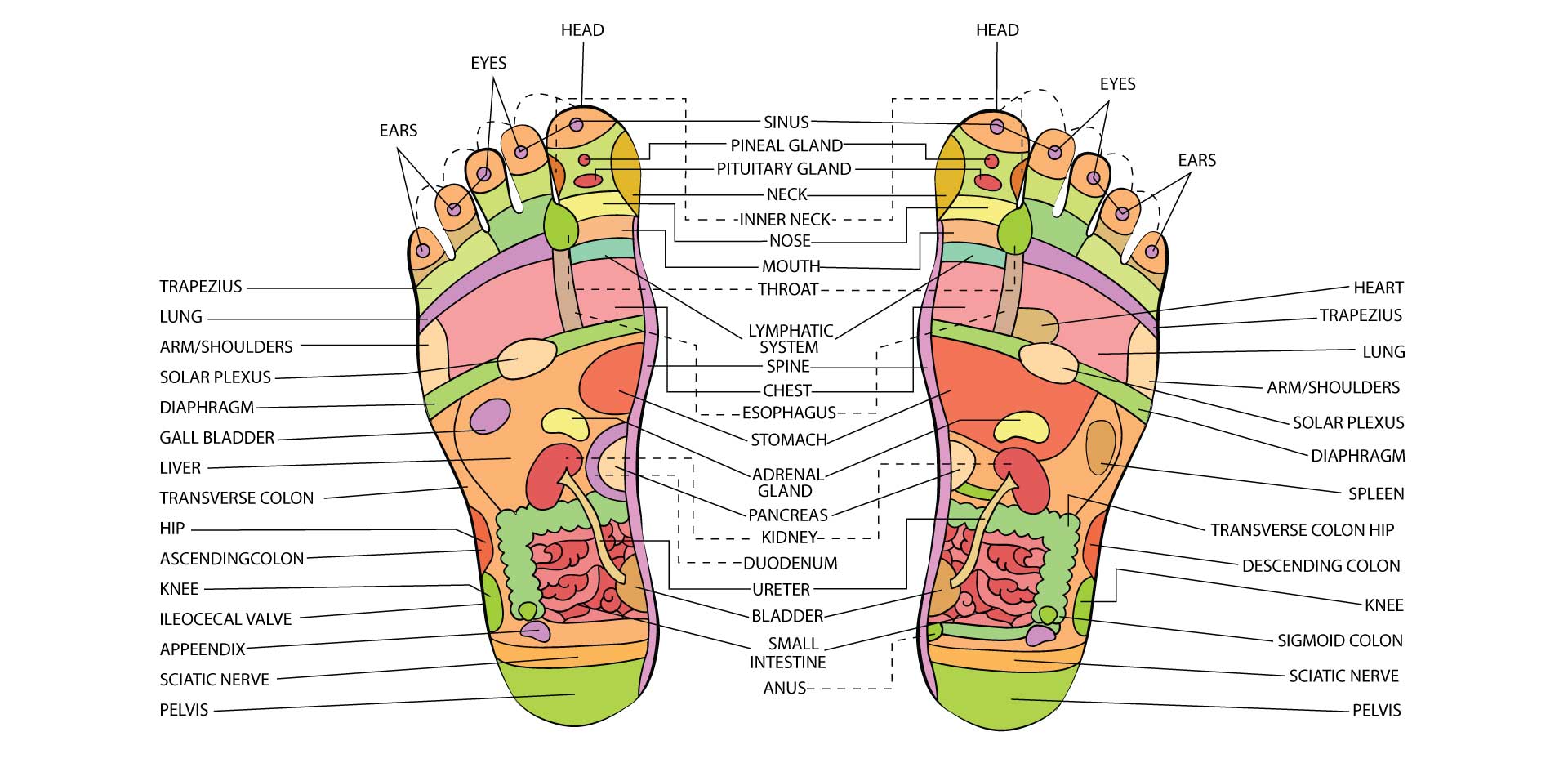
A foot reflexology map, also called a foot reflexology chart, divides the soles, tops and sides of the feet into zones. Each zone is thought to correspond to a part of the body. The idea comes from “zone therapy,” which divides the body into ten vertical lines running from head to toe. There are five lines on each side, and each one ends in a toe.
The map follows a simple rule that makes it easy to remember: your foot mirrors your body when you stand.
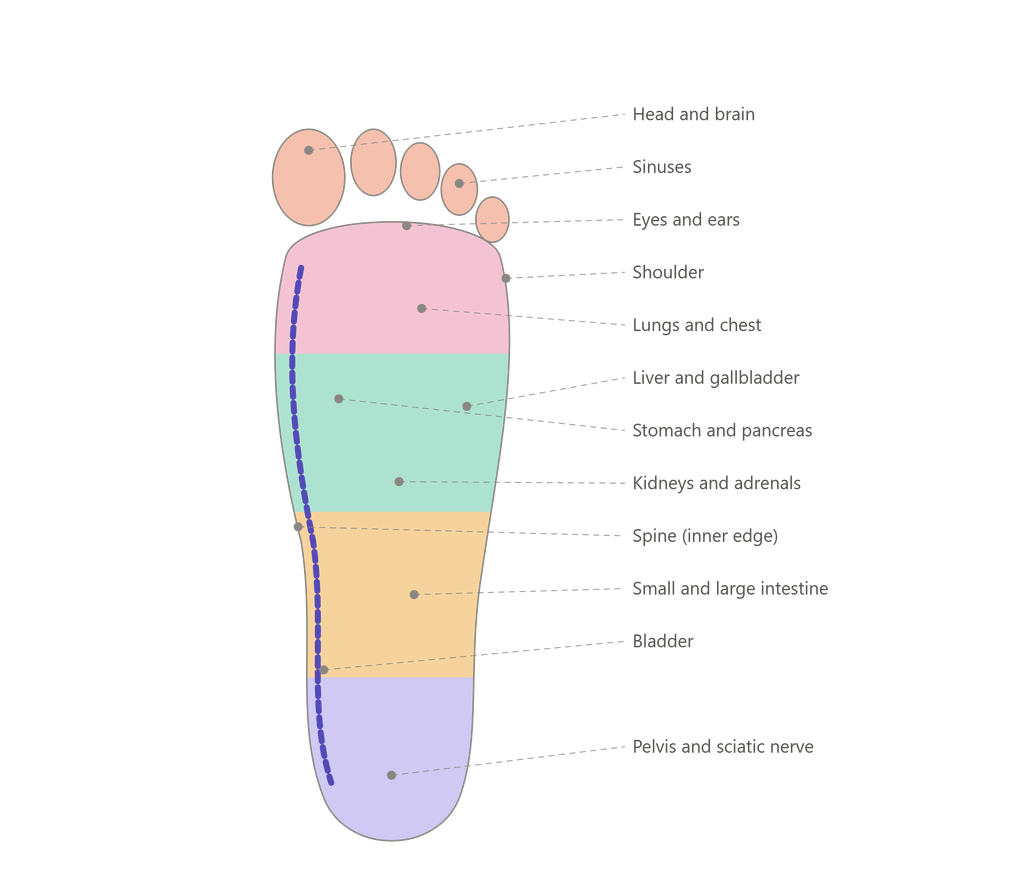
- Toes relate to the head and neck
- Ball of the foot relates to the chest
- Arch relates to the abdominal organs
- Heel relates to the pelvis and lower body
- Inner edge relates to the spine
- Right foot relates to the right side of your body, and the left foot to the left side
The Toes: Head, Brain and Sinuses
The toes sit at the “top” of the map, so they reflect the head.
- Big toe: the head and brain. The pad of the big toe is also traditionally linked to the pituitary gland, and its base to the neck.
- Tips of the smaller toes: the sinuses. Many people feel tenderness here during a cold or allergy season.
- Base of the second and third toes: the eyes.
- Base of the fourth and fifth toes: the ears.
How to work it: Hold each toe between your thumb and index finger. Make small circles from the tip down to the base. Spend extra time on the big toe and gently “walk” your thumb across its pad.
The Ball of the Foot: Lungs, Chest and Shoulders
Just below the toes, the padded ball of the foot reflects the chest area.
- Center of the ball: the lungs and chest
- Inner ball, below the big toe: the heart area, mostly on the left foot
- Outer edge, below the little toe: the shoulder
How to work it: Use the “thumb walking” technique. Bend the top joint of your thumb and inch it forward in tiny steps, like a caterpillar, across the ball of the foot from the inner edge to the outer edge.
The Upper Arch: Liver, Stomach and Kidneys
The soft area just below the ball, called the upper arch, reflects the upper abdomen. The two feet differ here, just as your organs do:
- Right foot, outer side: the liver and gallbladder, which sit on the right side of your body
- Left foot, inner side: the stomach and pancreas
- Center of both feet: the kidneys and adrenal glands. A useful marker is the solar plexus point, a small hollow in the middle of the sole just below the ball. Reflexologists press it to encourage calm breathing.
How to work it: Press your thumb slowly into the solar plexus point. Hold for 5–10 seconds while breathing out, then release. Repeat three times.
The Lower Arch: Intestines and Bladder
Lower in the arch, just above the heel, you reach the zone for the lower abdomen.
- Middle of the lower arch: the small and large intestines. Reflexologists traditionally work this area in a clockwise pattern that follows the direction of digestion.
- Inner edge, near the heel: the bladder. This spot often looks slightly puffy.
How to work it: Thumb-walk across the lower arch in horizontal rows, moving from the inner edge to the outer edge. Use lighter pressure here, because this area is often sensitive.
The Heel: Pelvis, Hips and Sciatic Nerve
The heel is the bottom of the map, so it reflects the bottom of your body.
- Whole heel pad: the pelvic area, hips and lower back muscles
- Line across the heel: the sciatic nerve. This zone is popular with people who sit for long hours.
How to work it: Heel skin is thick, so you can use firmer pressure here. Knead the heel with your knuckles, or roll your thumbs in small circles across it.
The Inner Edge: Your Spine
The inner edge of each foot, along the arch, has a curve similar to your spine. Reflexologists map the spine along it, from the neck at the big toe down to the tailbone at the heel.
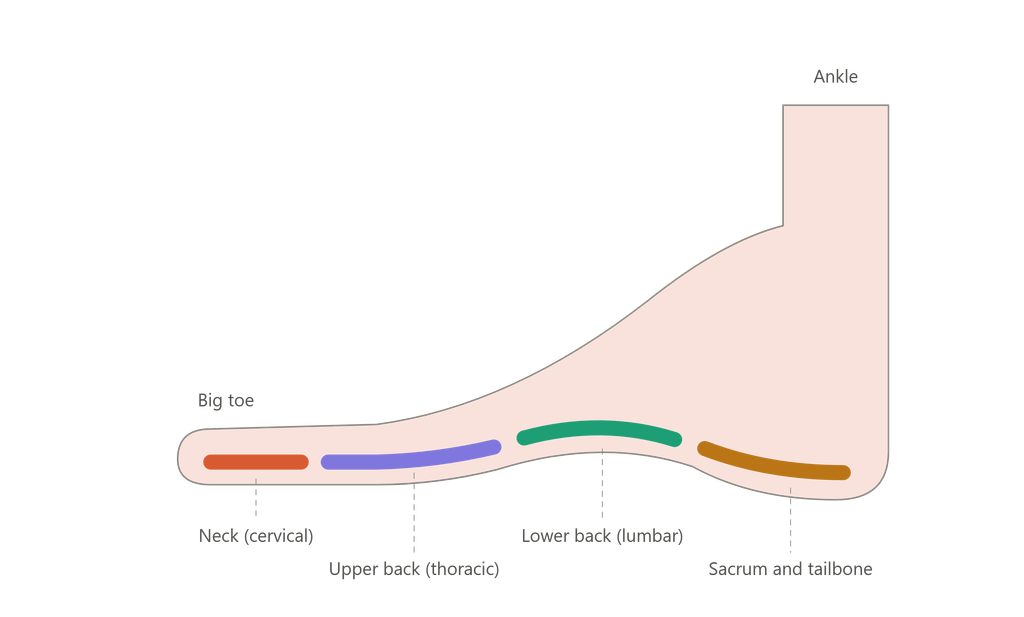
- Big toe joint: neck (cervical spine)
- Ball to upper arch: upper back (thoracic spine)
- Deepest part of the arch: lower back (lumbar spine)
- Inner heel: sacrum and tailbone
How to work it: Thumb-walk slowly along the inner edge from the big toe to the heel, then go back the other way. People with desk jobs often notice tension in the lower back zone.
Top and Sides of the Foot
The map also continues beyond the sole:
- Top of the foot, near the toes: the lymphatic system and upper chest
- Outer edge of the foot: the shoulder, arm, elbow and knee, running from the toes toward the heel
- Around the ankle bones: the reproductive organs and hips
How to Use a Foot Reflexology Map at Home: 5 Simple Steps
- Soak your feet in warm water for 10 minutes to relax the muscles.
- Warm up each foot with gentle strokes from toes to heel, using a little lotion or oil.
- Follow the map from top to bottom: toes, ball, arch, heel, then the inner edge.
- Use comfortable pressure. You should feel firm pressure that never turns painful. Tender spots are common, so ease off rather than pushing through.
- Finish with long strokes, drink a glass of water, and rest for a few minutes.
A full session takes about 15–20 minutes for both feet. If you are new to foot massage, start with our guide on how to do a foot massage.
What Does Science Say About Reflexology?
Be realistic: a foot reflexology map is a traditional tool, not a medical diagnosis. A sore spot on your foot does not mean an organ is unhealthy.
The research is mixed. A 2009 review in the Medical Journal of Australia concluded that the best evidence available to date does not demonstrate convincingly that reflexology is an effective treatment for any medical condition. A later review also noted that previous systematic reviews failed to show concrete evidence for any specific effect of reflexology in any conditions. mjanih
Studies on relaxation and well-being are more encouraging. A 2021 meta-analysis of forty-two articles with a total sample of 3,928 participants found that foot reflexology produced significant improvements in sleep disturbances. In people with multiple sclerosis, the most common reported effects were reductions in fatigue, pain, muscle spasms, stiffness, and psychological symptoms. nihnih
The bottom line: reflexology is best enjoyed as a relaxing, calming therapy that helps you sleep and unwind. It is not a replacement for medical care.
Safety: When to Avoid Foot Reflexology
Check with your doctor before trying reflexology if you have:
- Pregnancy, especially in the first trimester
- Blood clots, deep vein thrombosis or circulation problems
- Diabetes with nerve damage in the feet
- Open wounds, infections, gout or recent foot injuries
- Fractures or severe swelling
Experience Professional Reflexology in Istanbul
A map is a great starting point. A trained reflexologist, however, knows how much pressure each zone needs and in which order to work them. At Royal Foot Massage, our therapists combine traditional reflexology with relaxing massage techniques, so you leave feeling lighter from head to toe.
Explore our professional reflexology service or book your session today.
Frequently Asked Questions
Which part of the foot is connected to the stomach?
On a foot reflexology map, the stomach is in the upper arch of the left foot, just below the ball of the foot on the inner side.
What does it mean if a reflexology point hurts?
Reflexologists see tenderness as a sign of tension in that zone. Medically, though, it usually reflects local muscle tightness, pressure or tired feet. It does not show that an organ has a problem.
Is the reflexology map the same on both feet?
Mostly, yes. Some organs only appear on one foot: the liver and gallbladder on the right, and the heart, stomach and spleen mainly on the left.
How often should I do foot reflexology?
Most people enjoy one or two sessions a week. Even 10 minutes before bed can help you relax.